
When Fear Meets Faith
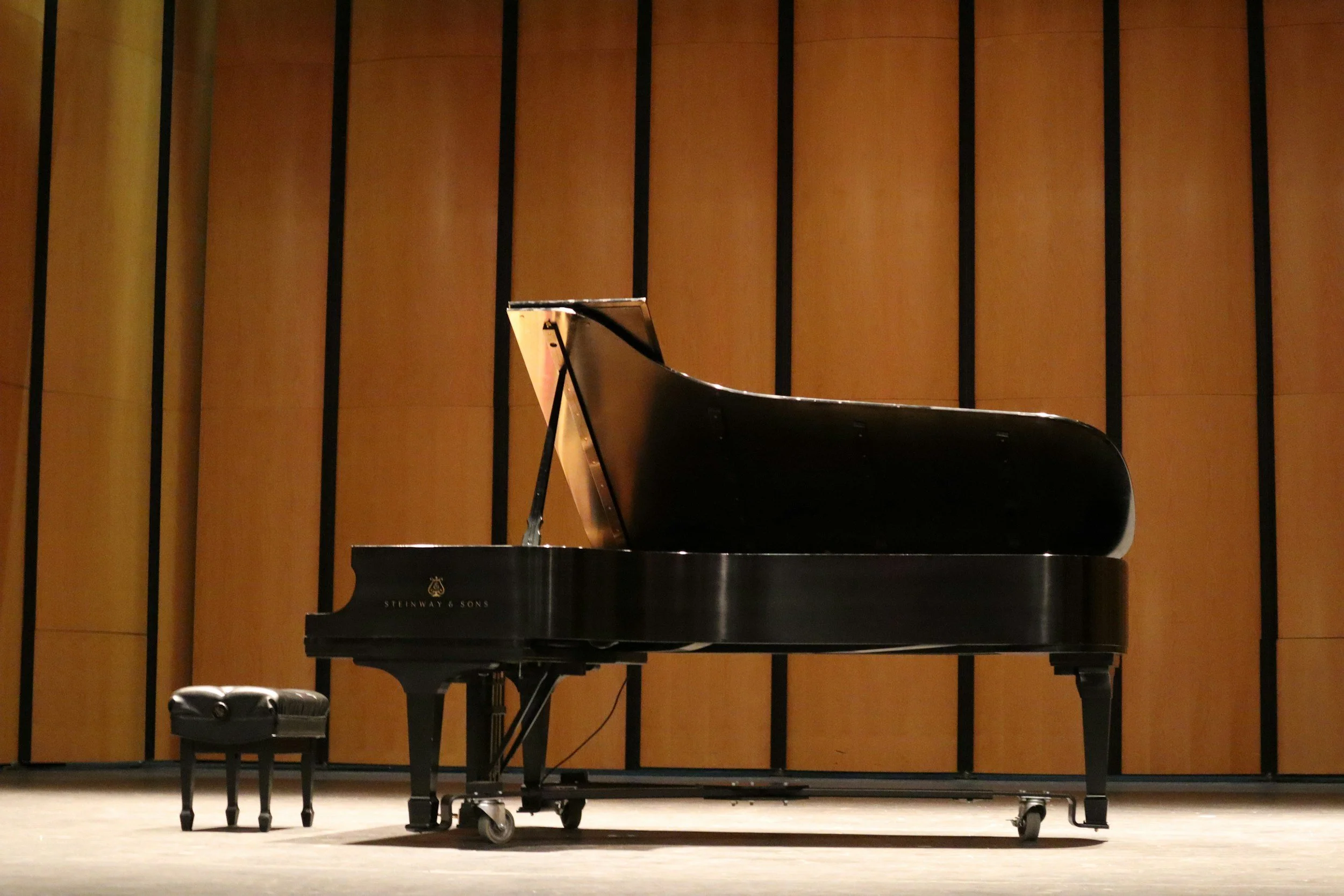
Dear my student,
I know you’re feeling anxious about your upcoming performance. That’s okay. In fact, that’s exactly what you’re supposed to feel.
I remember feeling the same way when I was a student at Juilliard. I struggled greatly with stage fright—to the point where I questioned whether I could even be a musician. I loved music deeply, but performing felt so overwhelming that for two to three years, I seriously considered quitting.
But something shifted.
Instead of walking away, I decided to face it. I began studying how athletes train mentally and started applying those ideas to my practice. I made my practice more intentional and, in some ways, more demanding—especially in strengthening my memory.
Did the fear completely go away? No. But I developed the skills to manage it. I learned how to respond in moments of nervousness, and over time, I gained more control on stage.
Nervousness, fear, anxiety—don’t push them away. Get to know them. Ask yourself why you feel this way. It’s because you care. Because you want to play well. And that is not a bad thing. It’s a good kind of fear.
But instead of letting that fear turn into stress about the stage—about what might go wrong, about uncertainty—shift your focus. Worrying about what might happen will not change anything. What matters is what you can do right now.
Come back to the work.
Think about everything we’ve talked about in lessons. Practice slowly, then at a medium tempo. Study the score carefully—every marking, every phrase. Listen deeply. Practice executing with intention. And at the end of your practice, practice performing.
If there are sections where mistakes keep happening, don’t just repeat them. Stop and examine them. There is always a reason. It could be fingering, hand position, tension, or a jump—something specific that needs attention. Isolate it. Analyze it. Fix it.
Very often, memory slips come from the left hand. Strengthen it. Practice the left hand alone until you can play it confidently from memory—as if the piece were written just for the left hand.
And don’t neglect mental practice. Go through the performance in your mind. Hear it. Feel it. This is difficult, but it is powerful. Sometimes even going through just the left hand mentally can make a big difference.
Do everything that is within your control—carefully, thoughtfully, and to the best of your ability.
And then, when you step onto the stage… let go.
The performance does not belong to you anymore.
What truly shapes you is not that one performance, but everything that led up to it—the discipline, the patience, the growth. That is what really matters.
Remember what Mary said: “I am the Lord’s servant. May it be to me according to your word.” (Luke 1:38)
That is the posture we learn—to offer ourselves, our work, and even our performances to God.
God often grows us not through perfect performances, but through imperfect ones. Not necessarily through moments the world applauds, but through moments that refine us. His definition of success is very different from ours.
If you have given your best in your preparation—with honesty and humility—that is already success, regardless of what happens on stage.
Because one performance does not define you. It does not determine whether you are a good pianist. It is simply one step in a much longer journey.
And in many ways, our lives are like this.
We study the Bible, we learn His Word, we practice it, and we try to obey and live faithfully—each in our own season. And yet, we often fail. We fall short. We don’t always live out what we know.
But God is not asking for perfection.
He asks for our sincere effort—our willingness to keep learning, to keep trying, and to come to Him with honesty and humility.
The rest is in His hands.
So do your best. Play with sincerity and gratitude. And trust the rest.
You are already growing.